
Interview Bias : types, examples and ways to mitigate

Leverage your Interview Data
AI interview notes, scorecard, follow-up, ATS integration, and more...
.svg)
.svg)
Interview bias can undermine your hiring process, leading to unfair decisions and poor team diversity.
But what are they and how to prevent them ?
In this guide, we'll look into the different types of interview bias and their impacts. We'll also explore how you can reduce these biases, to make better hiring decisions.
What Is Interview Bias
At its core, interview bias refers to preconceived ideas or mental shortcuts that interfere with objective evaluation of candidates.
It happens when something other than a candidate’s actual qualifications affects your judgment — such as their background, appearance, how they respond to an opening question, or whether you share common interests. These biases can be conscious (you know your preference) or unconscious (you aren’t aware you’re being influenced).
Halo & Horn Effect
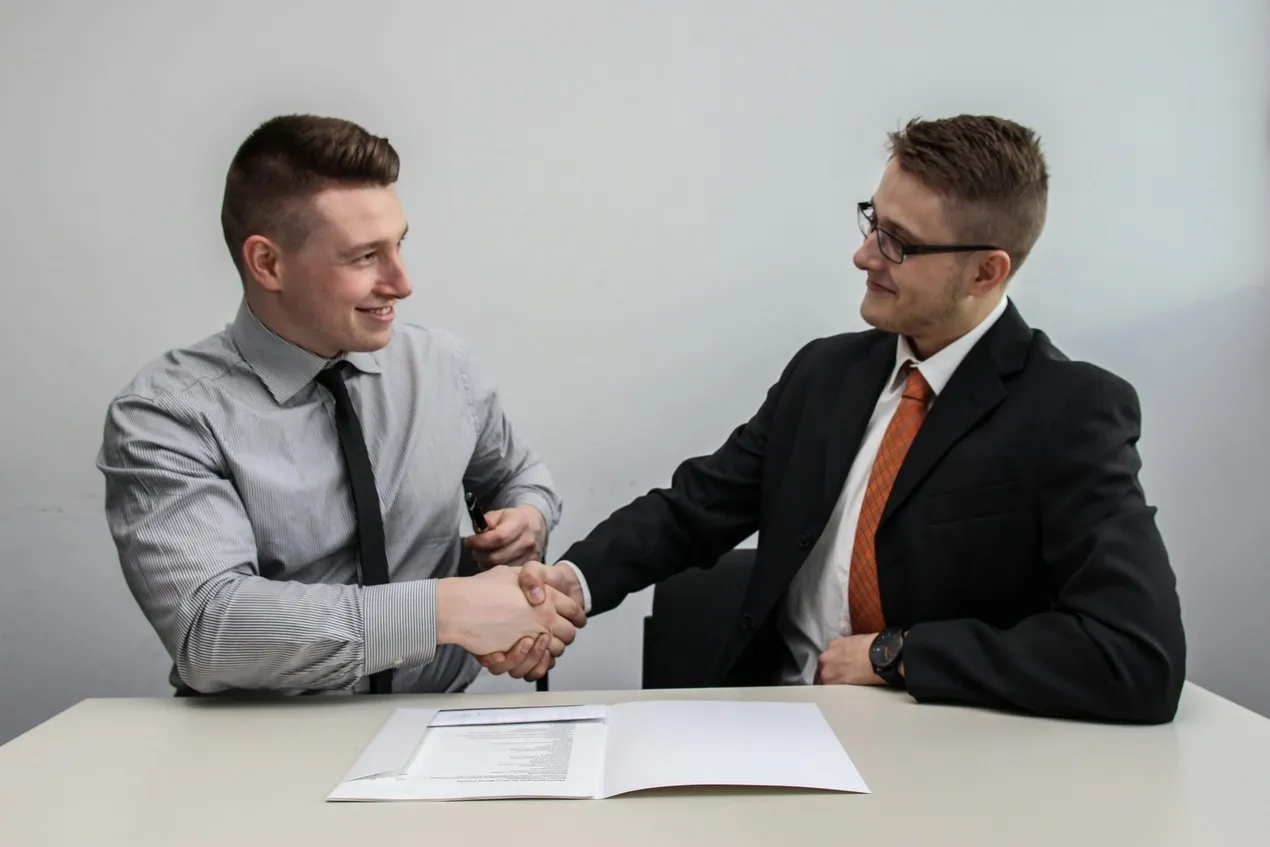
The Halo Effect happens when a strong positive characteristic — like a polished resume, confident demeanor, or impressive degree — leads you to assume everything else about the candidate is equally strong. In other words, one good trait “shines a halo” over unrelated areas of performance.
In contrast, the Horn Effect is the opposite: a single negative trait (a quiet introduction, an accent you’re not used to, or a minor résumé gap) creates a negative impression of the candidate as a whole. This can cause you to overlook actual strengths or relevant competencies.
Both effects are deeply rooted in human psychology. Our brains make quick judgments to save cognitive effort, but that shortcut can override objective evidence you’ve gathered during the interview.
Impact on Your Hiring Decisions
When you let the Halo or Horn Effect influence your judgment, several issues arise:
1. Misplaced Confidence or Concern
With the Halo Effect, you might overestimate a candidate’s overall ability based on one impressive detail — like a prestigious degree — even if their core skills for the role are missing.
2. Overlooking Weaknesses or Strengths
The Horn Effect can make you underestimate a candidate who has relevant experience or potential simply because of a small misstep or an attribute that doesn’t align with your personal preferences.
3. Inconsistent Evaluations
Because these biases operate subconsciously, two interviewers might come away with very different impressions of the same candidate — making your evaluation process inconsistent and subjective.
4. Reduced Diversity and Fairness
Halo and Horn Effects often skew decisions toward familiar or comfortable profiles, which can inadvertently limit diversity and reduce your team’s access to a broader range of talent.
How to Prevent the Halo & Horn Effect
1. Use Structured Interviews
One of the most effective ways to counteract these biases is to standardize your interview process. Asking the same questions in the same order and using explicit scoring rubrics helps anchor your evaluation in job-related criteria, not first impressions.
2. Score Answers Objectively
Define what a “strong,” “average,” or “weak” response looks like before interviewing. When you evaluate responses against clear standards, you’re less likely to let one trait dominate your overall assessment.
3. Evaluate Multiple Competencies Separately
Rather than judging a candidate’s overall fit based on a single impressive skill, break your assessment into distinct competencies (e.g., communication, technical ability, problem-solving). This forces you to judge each area on its own merits.
4. Involve Multiple Interviewers
Different perspectives reduce the influence of any one person’s bias. When interviewers discuss evidence and calibrate scores together, you get a more balanced and fair evaluation.
5. Reflect on First Impressions
When you notice an unusually strong positive or negative gut reaction, pause and ask yourself: “What evidence supports this feeling?” Separating gut reaction from documented performance helps you stay evidence-driven.
Confirmation Bias
Confirmation bias is one of the most subtle — and harmful — interview biases you can fall victim to without realizing it. At its core, it’s your tendency to seek out, favor, or interpret information in a way that confirms your existing beliefs about a candidate rather than evaluating all the evidence objectively.
In interview contexts, confirmation bias often emerges before you even meet the candidate. For example, if you see an impressive company name, degree, or skill on a résumé, you might enter the interview already inclined to view everything they say through a positive lens.
How Confirmation Bias Impacts Your Hiring Decisions
Confirmation bias can skew your evaluations in powerful ways:
1. It Reinforces First Impressions Too Quickly
Studies have shown that hiring decisions are often made in the first few minutes of an interview, long before a complete picture of the candidate emerges. Once your brain settles on an initial judgment, you’re more likely to filter and interpret subsequent responses in a way that strengthens that judgment — even if the evidence doesn’t fully support it.
2. It Alters Questioning and Listening Patterns
Under the influence of confirmation bias, your questions can become leading rather than exploratory. You might unconsciously ask follow-up questions that highlight strengths you already expect to see, instead of probing areas where the candidate actually needs to demonstrate capability or fit.
3. It Reduces Objectivity and Fair Comparison
When each candidate is evaluated through the filter of someone’s initial assumptions, comparisons become unreliable. Two equally qualified candidates might be judged very differently simply because the interviewer formed different first impressions. That’s especially true in unstructured interviews, where questions and scoring vary widely.
4. It Harms Diversity and Inclusion
Because confirmation bias often relies on pre-existing beliefs — which might include stereotypes about backgrounds, schools, or industries — it can unintentionally disadvantage candidates who don’t fit a familiar mold. That’s why diverse candidate pipelines alone aren’t enough; the way you evaluate them matters too.
How to Prevent Confirmation Bias in Your Process
Preventing confirmation bias isn’t about eliminating intuition — it’s about grounding decisions in structured evidence, not assumptions.
1. Start With Clear, Job-Related Criteria
Define what success looks like before you interview. When you know exactly what skills and behaviors matter for the role, you’re less likely to let unrelated impressions influence your evaluation. Structured interviews help anchor you to those criteria.
2. Use Standardized Questions and Scoring Rubrics
Structured interviews reduce the influence of confirmation bias because every candidate is asked the same questions and scored against the same rubric. That encourages objective evidence over subjective impressions.
3. Actively Challenge Your Assumptions
Make it a habit to play “devil’s advocate” with your own impressions. Try hypothesizing what evidence might disprove your initial take, and seek that out in responses. This simple practice helps you avoid cherry-picking data that just confirms what you already think.
4. Debrief With Others Before Scoring
When your team discusses candidates collaboratively and shares evidence before assigning scores, it’s harder for one person’s confirmation bias to dominate the outcome.
Affinity (or Similarity) Bias

Affinity bias is the human tendency to feel more comfortable around — and therefore rate more favourably — people who remind us of ourselves in some way. That similarity can be as surface-level as going to the same school, liking the same hobbies, or having similar cultural references. Because our brains are wired to spot patterns and connections quickly, it’s easy to mistake that feeling of familiarity for a signal of competence or fit.
During interviews, affinity bias can show up when you:
- feel instant rapport and interpret it as evidence of ability,
- overlook gaps in skills because you just got along well, or
- unconsciously de-prioritize candidates who don’t remind you of yourself.
How Affinity Bias Impacts Hiring Decisions
1. It Skews Objective Evaluation
When you favour candidates based on similarity rather than skills, you weaken your ability to evaluate competence fairly. This means two candidates with equal qualifications might be judged very differently based on subjective comfort instead of evidence.
2. It Reduces Diversity and Inclusion
Building teams where everyone thinks or looks alike doesn’t just limit representation — it limits creativity, problem-solving, and team resilience. Teams enriched by varied perspectives outperform homogeneous ones because they avoid “groupthink” and see problems from multiple angles.
3. It Leads to Missed Opportunity
Highly qualified candidates who don’t share your background or interests can be overlooked simply because they don’t feel familiar. Over time, this pattern can deprive your team of talent that could drive innovation and contribute in unique ways.
How to Prevent Affinity Bias in Your Interviews
1. Use Structured Interviews
Structured interviews — where every candidate receives the same questions and is scored on the same job-related criteria — minimize room for “comfort-based” impressions to sway your judgment. This levels the playing field and keeps the focus on job performance.
2. Standardize Scoring Rubrics
Use clear rating scales tied to specific competencies. When interviewers assess evidence against a rubric rather than gut feelings tied to personality or affinity, you reduce subjective influence.
3. Involve Diverse Panels
A panel with varied backgrounds naturally balances individual affinities. When multiple voices weigh in, it’s harder for similarity bias to go unchecked — and easier for evidence to win out.
4. Increase Awareness and Reflection
Simply knowing that affinity bias exists helps you catch it in action. Ask yourself:
- “Am I simply comfortable with this candidate because they remind me of someone?”
- “Would I value the same evidence if they had a different background?”
First Impression / Primacy Bias:
Primacy bias comes from the way our brains process information. We’re wired to form quick initial impressions to make sense of social interactions fast, but that early judgement can anchor subsequent interpretation — even if later evidence contradicts it. Within interviews, research shows that people can form impressions in as little as a few seconds and tend to remember early information better than what comes later.
How Primacy Bias Skews Your Hiring Decisions
1. It Overweights Early Moments
You might focus more on the candidate’s first answer, handshake, or initial impression of professionalism than on deep evidence of job-related skills. This can lead you to overlook later, more relevant information.
2. It Distorts Comparisons
If you interview several candidates in one session, the very first interview can set a mental benchmark, making later candidates seem better or worse by comparison — regardless of their actual qualifications.
3. It Can Lead to Premature Decisions
Sometimes interviewers decide — consciously or not — that they “like” or “don’t like” a candidate very early. That initial judgement then anchors their interpretation of subsequent answers, reducing objectivity across the rest of the interview.
4. It Favours Quick Judgements Over Evidence
When you let early impressions dominate, you risk valuing surface traits (like confidence or appearance) over job-relevant competencies. That undermines fairness and the reliability of your hiring decisions.
How to Prevent First Impression / Primacy Bias
1. Delay Judgement Until Evidence Is Collected
Train yourself to treat first impressions as just one data point, not a summary of the candidate. Make notes throughout the interview and score answers independently as they come in rather than relying on memory.
2. Use Structured Interview Formats
Structured interviews — with consistent, job-relevant questions and scoring rubrics — make it harder for early impressions to dominate your thinking. This keeps the focus on objective criteria, not gut instinct.
3. Compare Candidates on Defined Criteria Only
Rather than comparing candidates to each other or to the first person you interviewed that day, evaluate everyone against the same predetermined competencies. This reduces noise and keeps decisions evidence-based.
4. Take Detailed Notes During the Interview
Writing evidence as it unfolds — not just recalling it later — helps ensure that early impressions don’t overshadow later, job-relevant information. It also supports clearer discussions with your hiring team afterward.
Contrast Bias:

Contrast bias — sometimes called contrast effect bias — is a cognitive pattern where you evaluate someone based on how they stack up against others rather than how they match the job’s requirements.
For example, an average candidate who follows a weak interviewee may seem strong by comparison. Conversely, a solid candidate interviewed after an exceptional performer might appear less impressive even if they meet the role’s requirements.
How Contrast Bias Impacts Your Hiring Decisions
Contrast bias affects your decision-making in several subtle yet powerful ways:
1. Skewed Evaluations
When your judgment is anchored to prior candidates, you might misconstrue a candidate’s actual fit. Someone can look stronger or weaker than they really are simply because of the timing of their interview.
2. Inconsistent Scoring
If you score candidates on different scales — high if following a weak candidate, low after a strong one — your evaluations lose consistency. This makes comparisons across candidates far less reliable.
3. Impact on Fairness
Contrast bias can skew hiring outcomes by favoring those who happen to interview after a poor performance or disadvantaging strong candidates who immediately follow a superstar interview. This undermines fairness and weakens the integrity of your process.
4. Reduced Predictive Validity
Because contrast bias steers attention away from objective job-related criteria, your hiring decisions become less predictive of actual job success. You risk preferring candidates for reasons unrelated to actual competencies.
How to Prevent Contrast Bias
1. Evaluate Against Criteria — Not Candidates
The simplest way to weaken contrast bias is to evaluate each candidate against predefined job competencies rather than against who you just interviewed. Rely on job-related scoring rubrics and benchmarks.
2. Use Structured Interviews
Structured interviews with standardized questions and scoring criteria anchor your evaluations in measurable responses instead of subjective comparisons. When every candidate is assessed the same way, contrast effects diminish.
3. Score Immediately After Each Interview
Document your evaluations immediately after each interview — before thinking about the next candidate. That helps you base scores on the candidate’s performance rather than relative impressions.
4. Take Breaks Between Multiple Interviews
If you’re interviewing several candidates in one session, short breaks can help reset your mental baseline so evaluations stay objective instead of carryover comparisons.
5. Use Diverse Panels
Multiple perspectives dilute individual comparison effects. A structured panel discussion can help balance individual contrast biases by centering on evidence rather than perceptual comparisons.
Nonverbal & Appearance Bias:
Nonverbal bias refers to giving too much weight to body language, physical appearance, or mannerisms when assessing candidates. For example, you might assume a candidate with strong eye contact is confident and competent, or conversely interpret quiet body language as lack of confidence — regardless of whether their answers demonstrate the skills you’re actually looking for.
Research shows that observers tend to make quick judgments based on nonverbal behavior, and these first impressions can be automatically connected to perceived competence or hireability even when they’re unrelated to job performance.
How Nonverbal & Appearance Bias Impacts Your Hiring Decisions
1. It Distracts From Job-Relevant Skills
When you overvalue nonverbal signals, you risk overlooking the most critical information — what the candidate actually knows and can do. Qualifications and competencies become secondary to subjective impressions.
2. It Reduces Fairness
Because nonverbal behaviour can vary widely by culture, personality style, and even interview context, this bias disadvantages candidates who communicate differently — for example, introverted candidates or those from cultural backgrounds where direct eye contact isn’t the norm.
3. It Can Undermine Diversity
Appearance biases can reinforce stereotypes and status signals unrelated to ability. Candidates who don’t “fit the look” that feels familiar may be unfairly discounted, which in turn narrows your talent pool and weakens inclusion.
How to Prevent Nonverbal & Appearance Bias
1. Anchor Your Evaluation in Job Criteria
Make sure what matters most — skills, experience, and performance evidence — drives your evaluation. Prioritize predefined competencies over body language or impression. A structured scorecard keeps the focus on relevant performance indicators.
2. Ask for Evidence, Not Impressions
Instead of noting that a candidate “seems confident,” prompt for concrete examples that demonstrate the skill you’re evaluating. For example:
“Tell me about a time you handled a high-pressure project.”
This shifts attention away from appearance and toward behaviour and outcomes.
3. Use Structured Interview Questions and Scoring
When every candidate answers the same job-relevant questions and is scored against objective criteria, biases around nonverbal behaviour have less room to influence your judgment. Structured formats keep assessments consistent and fair.
4. Train Interviewers on Bias Awareness
Encourage your hiring team to recognize and reflect on nonverbal bias. Simple awareness — understanding that strong eye contact or confident gestures don’t automatically equate to job success — helps interviewers pause and evaluate evidence instead of impressions.
Gender, Age & Other Demographic Biases:

Demographic bias happens when an interviewer’s expectations or assumptions about a person’s abilities or fit are shaped by who they are rather than what they can do. For example, assuming someone will be less committed to a demanding role because of their gender, or thinking a candidate is “too old” or “too young” to adapt quickly, are classic forms of this bias.
How These Biases Impact Your Hiring Decisions
1. They Distort Objective Evaluation
When demographic traits influence judgment, skills and fit take a back seat. For example, age stereotypes — like assuming younger candidates lack experience or older ones lack technological fluency — can lead you to overlook strong performers.
2. They Reduce Diversity and Inclusion
Hiring decisions biased by gender, age, race, or other demographics limit the diversity of your team. Diverse teams are not just more equitable — they drive richer perspectives and better outcomes. Bias undermines that potential.
3. They Lead to Unintended Discrimination
Even well-meaning recruiters can act in ways that disadvantage protected groups. If a candidate’s demographic trait would change the decision, that’s discrimination — and in many places, it’s illegal. That’s why structured, evidence-based processes are so important.
How to Prevent Demographic Bias in Your Interviews
1. Use Structured, Job-Relevant Evaluation
Limiting bias starts with structuring your interview around role-specific competencies instead of personal impressions. When everyone answers the same questions and is scored on the same criteria, demographic traits have less room to influence outcomes.
2. Apply Blind Screening Where Possible
Removing demographic markers (like names, photos, dates of birth, or graduation years) from early applications can help you evaluate skills and experience without bias. This makes it more likely you’ll identify talent based on ability rather than background.
3. Train Interviewers on Bias Awareness
Bias awareness training helps teams recognize and counteract unconscious assumptions. Training paired with regular reflection improves interviewers’ ability to distinguish job-related evidence from irrelevant demographic cues.
4. Include Diverse Perspectives in Hiring Panels
Panels that reflect different backgrounds naturally balance individual biases. Multiple evaluators reduce the impact of any one person’s stereotypes and help keep decisions grounded in evidence
Mitigating Interview Bias with AI: Noota
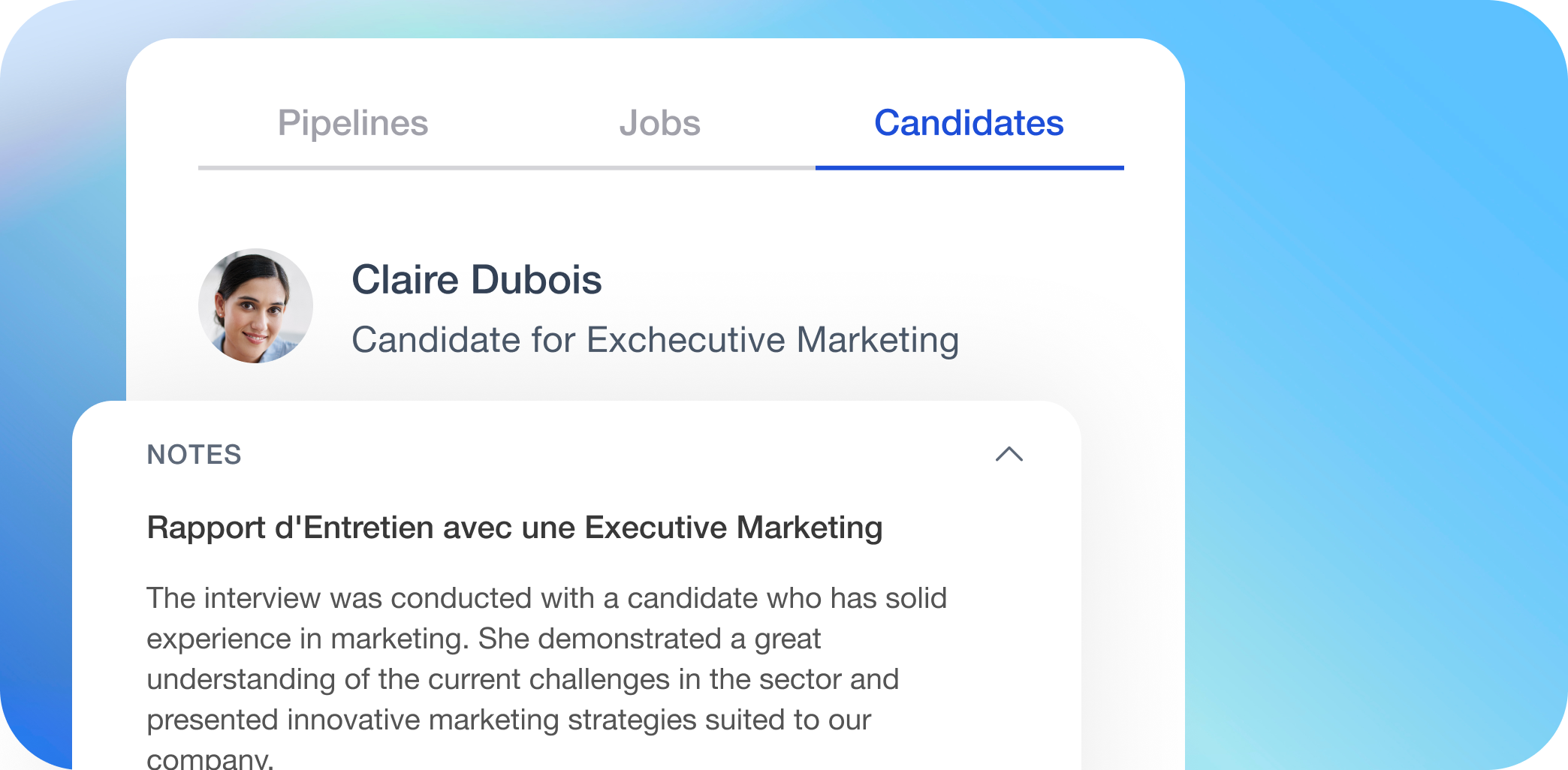
You want to reduce bias and conduct fairer interviews ? Noota helps you create a more objective and structured interview process:
- Complete Documentation: Noota records all your interviews, ensuring you capture every detail. This prevents bias that can occur from relying on memory or incomplete notes. You can also revisit the recordings to verify facts and ensure consistency.
- Fast Cross Check : Transcripts are searchable, making it easy to find and review specific parts of the conversation. This feature helps you cross-check information and ensure you assess candidates fairly based on their actual responses.
- Comprehensive Evaluation: Noota generates AI reports that include include key points, highlights, and a summary of each candidate's responses. This comprehensive evaluation helps you make more informed decisions by providing a clear and unbiased overview of each candidate’s strengths and weaknesses.
- Easy Comparison of Candidates : Noota’s structured reports standardize the data, allowing you to compare candidates on an equal footing. This helps you identify the best fit for the role based on objective criteria rather than personal biases.
You want to significantly reduce interview bias ? Try Noota for free.
FAQ
❓ What is interview bias, really?
Interview bias happens when factors unrelated to job performance influence how you evaluate a candidate. These influences might come from personal preferences, stereotypes, past experiences, or even subtle patterns like who you interviewed just before. Biases can be conscious or unconscious, and both can unfairly affect your judgment.
In an interview context, it means you evaluate people differently not because of the evidence they provide about their ability, but because of unrelated impressions or assumptions.
❓ Can bias ever be completely eliminated?
In human decision-making, it’s unrealistic to expect bias to disappear entirely. What is possible — and what good recruiting teams focus on — is reducing its influence through process design and awareness.
Structured interview frameworks, clear scoring criteria, and regular interviewer training help keep decisions grounded in job-relevant evidence instead of intuition or stereotype.
❓ How do I spot bias in my interviews?
You can begin spotting bias by looking for patterns where evaluations seem to be driven by other factors than skills or experience. Common signs include:
- Strong disagreement between panels about the same candidate
- Ratings that shift depending on interview order
- Similar candidates being scored very differently without clear evidence
- A pattern of hiring people who “just felt right” rather than the most qualified
If candidates who look different, come from different backgrounds, or communicate differently consistently receive lower scores, that’s another strong cue to examine your process.
❓ Is structured interviewing enough to prevent bias?
Structured interviewing is one of your most effective tools — and research shows it significantly reduces bias because each candidate is asked the same questions in the same order, and responses are evaluated by predefined criteria.
However, structure alone isn’t a magic bullet. Combining it with training, diverse panels, and objective scoring optimizes outcomes and reduces reliance on qualitative impressions.
❓ Can AI help reduce interview bias?
Yes — when used thoughtfully. AI tools can help standardize assessments, generate consistent summaries, and detect patterns that humans might miss. But AI isn’t bias-free in itself: if the data it’s trained on is biased, its outputs can reflect or amplify those biases.
AI is best used as a support tool, not a decision-maker, and always with human oversight to interpret and validate results.
❓ What should I not do in an interview to avoid bias?
Avoid asking or acting on unstated assumptions such as:
- Personal questions that don’t relate to job requirements
- Snap judgments based on appearance or mannerisms
- Comparing one candidate to another instead of to the job criteria
- Interpreting sociability or confidence as a proxy for competence
Remaining aware of these pitfalls and using structured scoring frameworks keeps your focus where it belongs: on performance-relevant evidence.
❓ How do I build bias awareness in my team?
Start with training sessions that define common biases and illustrate how they operate in interviews. Encourage interviewers to reflect on their own assumptions, use scoring rubrics consistently, and calibrate their evaluations with peers. Regular debriefs where evidence — not impressions — drives discussions help keep bias in check.
Leverage your Interview Data
AI interview notes, scorecard, follow-up, ATS integration, and more...

Jean-marc is an AI expert helping recruiters & professionnals leverage these tools in their everyday work.
Related articles
.webp)

.png)
Forget note-taking and
try Noota now
FAQ
In the first case, you can directly activate recording as soon as you join a videoconference.
In the second case, you can add a bot to your videoconference, which will record everything.
Noota also enables you to translate your files into over 30 languages.
.svg)