
AI Recruiting : Best Tools & Use Cases

Leverage your Interview Data
AI interview notes, scorecard, follow-up, ATS integration, and more...
.svg)
.svg)
With the war for talent raging and candidate expectations at an all-time high, being a recruiter has never been more competitive.
One key to your success might be to adopt AI-powered tools to optimize your recruitment processes.
In this article, we'll go straight to the best applications of AI in your workday, with examples of tools included.
1. Candidate Search
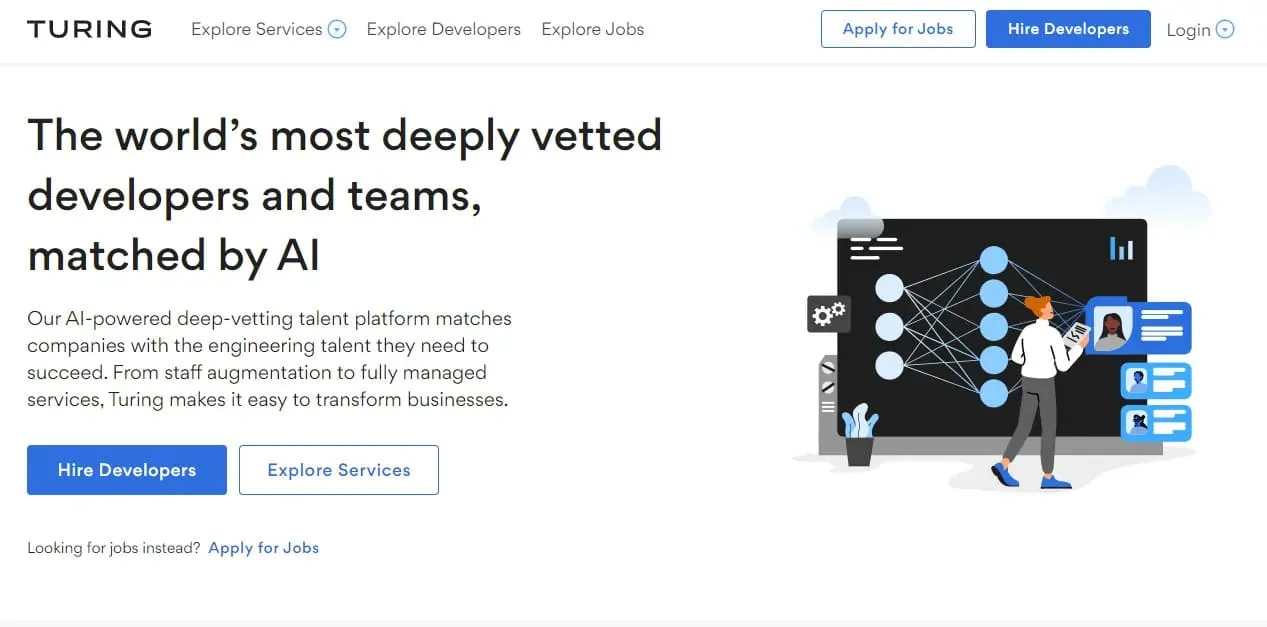
AI candidate search uses machine learning, data analysis, and natural language processing to scan massive data sets — including resumes, social profiles, internal databases, and public sources — to identify candidates whose skills and experience best match your role requirements. Rather than relying on simple keyword matches, AI understands context, patterns, and relationships in text, which means it can interpret a candidate’s experience even if the wording isn’t identical to your job description.
✨ Examples of AI Candidate Search Tools
Here are some tools that illustrate how AI is applied in real recruiting workflows:
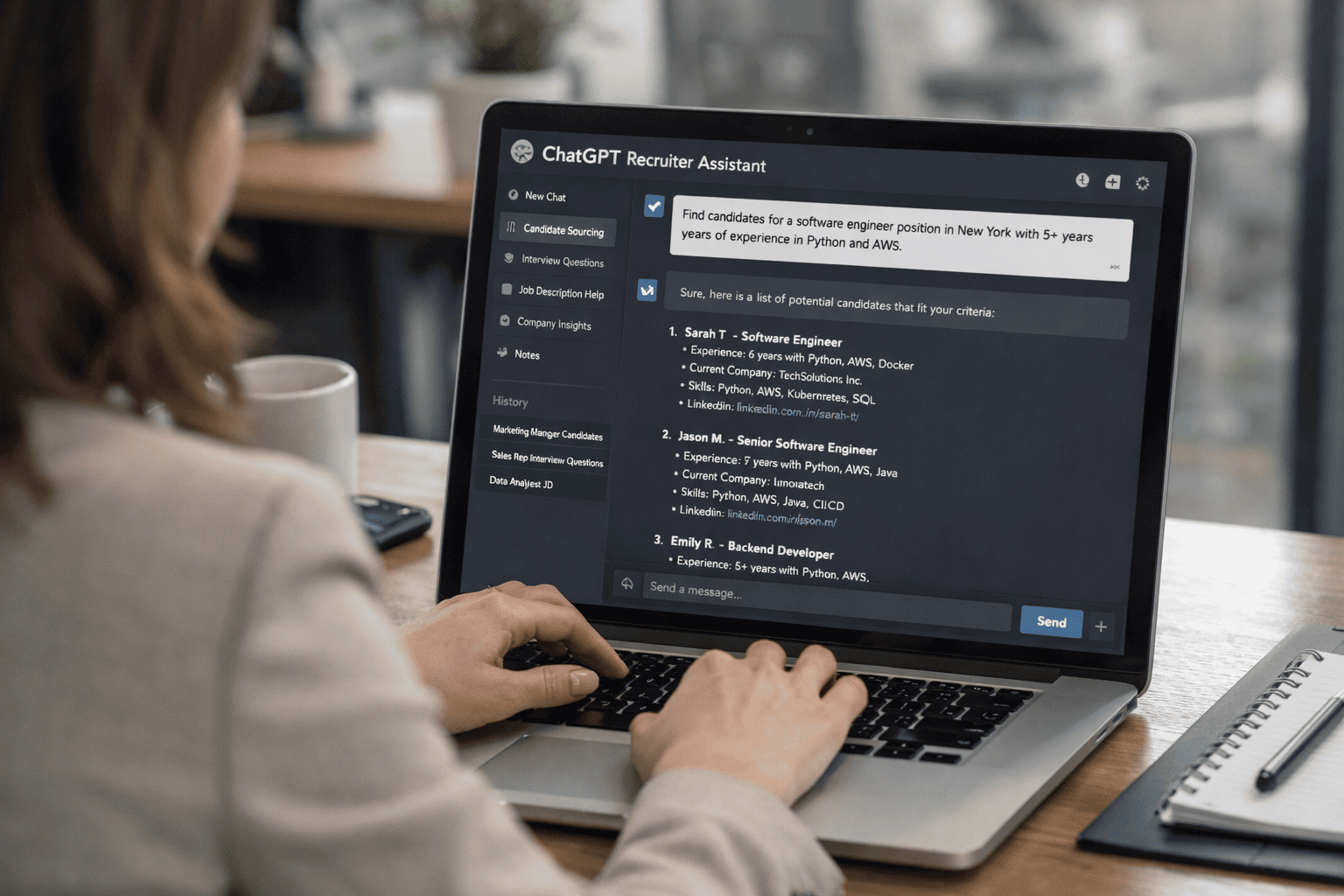
- Software such as Turing and Manatal use deep learning algorithms not only to find the best candidates for a given position, but also to offer a personalized candidate experience
- AI sourcing in ATS platforms: Platforms like iCIMS integrate AI to help match candidate profiles to open roles, taking the first step in talent acquisition off your plate.
- Dedicated AI recruitment platforms: Tools like Findem offer deep search capabilities to identify ideal candidates and create customized candidate lists based on detailed role criteria.
2. Candidate Outreach
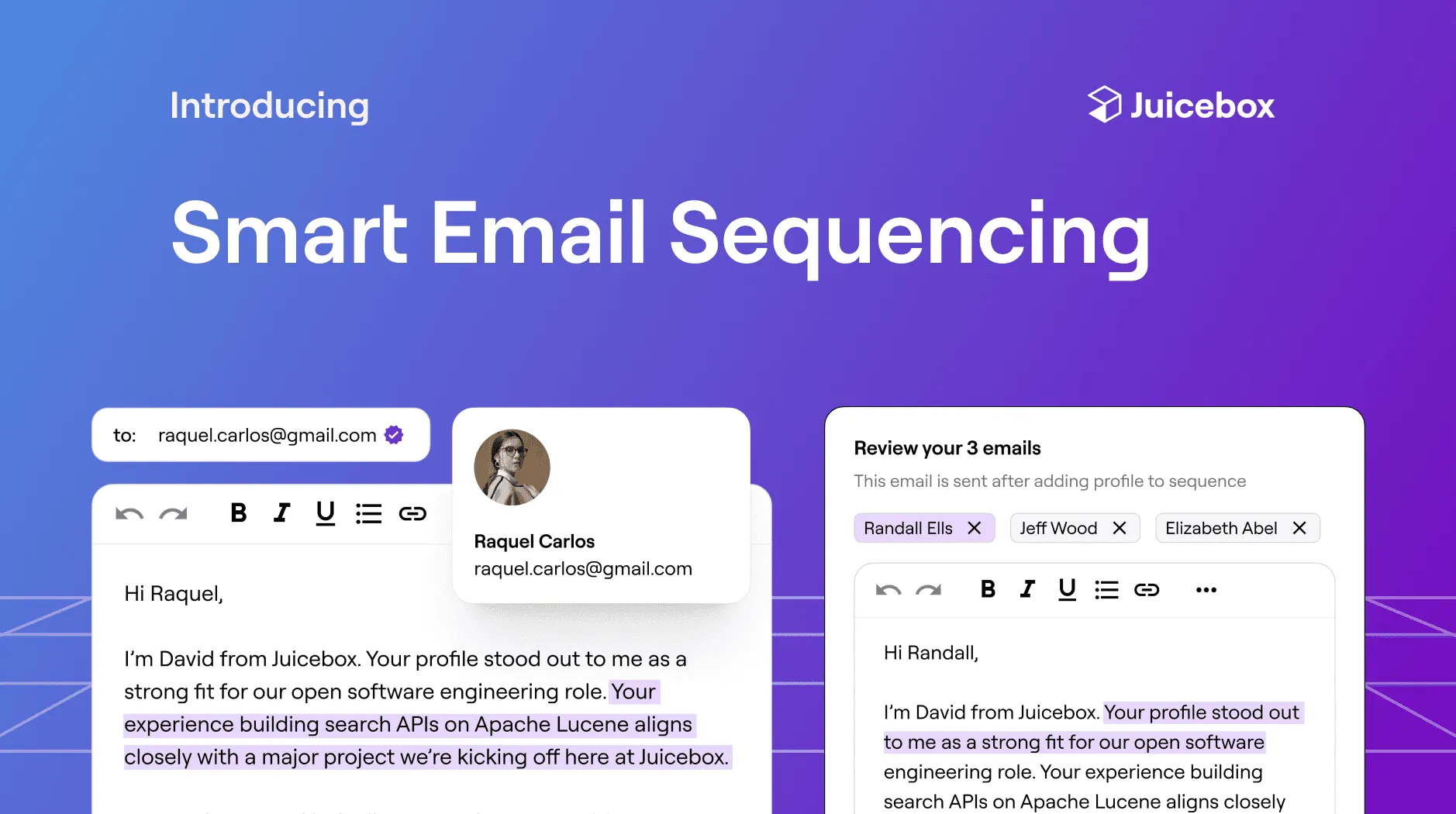
AI candidate outreach uses natural language processing and automation to draft, personalize, schedule, and optimize communications with candidates across channels like email, LinkedIn, SMS, and more. Instead of sending generic bulk messages, AI tools generate context-aware outreach that mentions skills, experiences, or project details from a candidate’s profile — all while saving you significant time.
Some systems also automate the follow-up flow: if a candidate doesn’t reply, AI sends a tailored second message at the right time, increasing the chance of engagement without you typing a word.
💡 Examples of AI Candidate Outreach Tools
Here are some categories and specific tools that help with modern AI-powered outreach:
✉️ AI Email and Messaging Platforms
- Juicebox: A recruiter favorite for AI email outreach and automation. It offers advanced sequencing, personalized messaging, conditional workflows (like tailored follow-ups), and analytics on engagement — all on a unified dashboard.
- Fetcher: Combines sourcing and outreach automation, allowing you to generate curated lists of candidates and run personalized email campaigns from the same platform.
🤖 AI Recruiting Suites With Outreach Features
- HireEZ (formerly HireEZ): This platform uses AI to surface candidates and automatically engages them in your voice through customized outreach sequences.
- Comprehensive solutions like Gem and Humanly connect outreach with ATS/CRM data so your candidate engagement stays organized and integrated with the rest of your workflow.
3. Job Advertisement
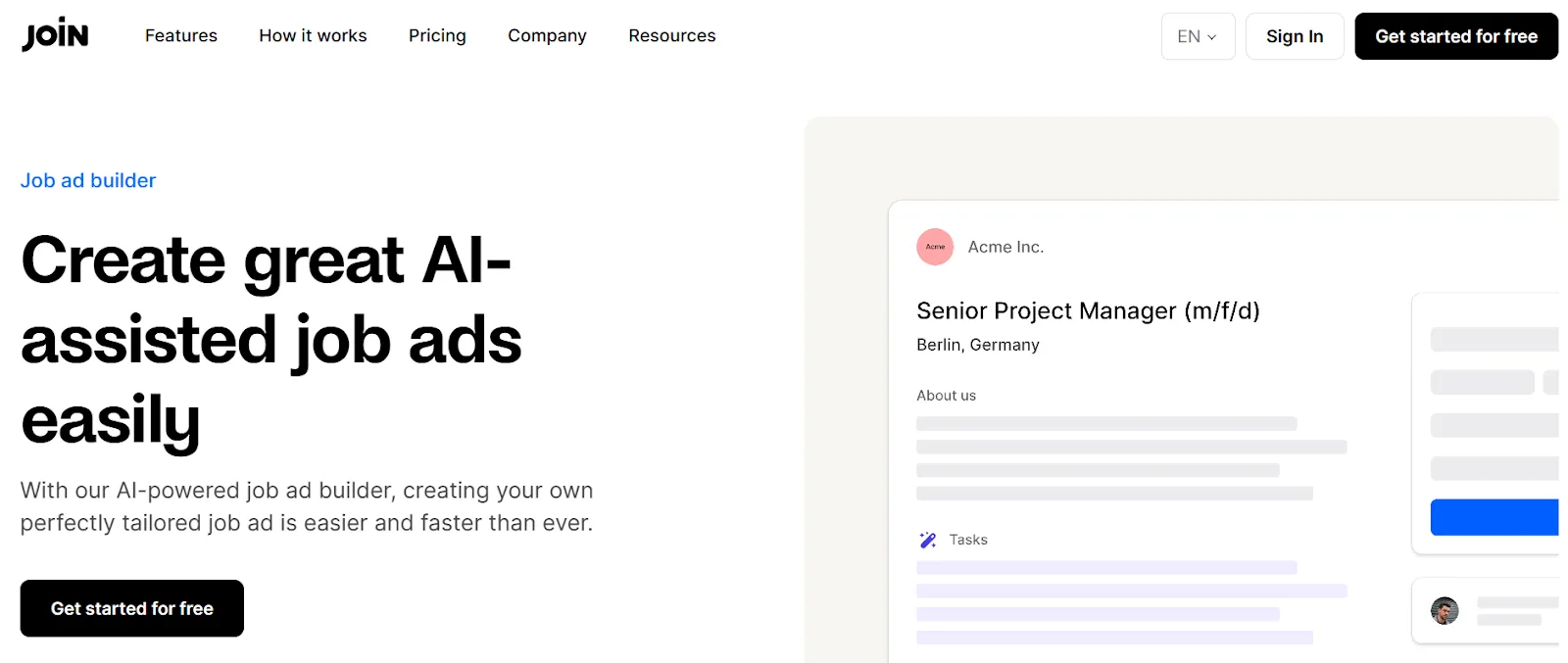
Traditionally, writing a job ad meant starting from scratch or digging through old templates. With AI tools, you can generate a clear, compelling first draft in minutes — one that includes role overview, responsibilities, and requirements written in a way that resonates with candidates and AI search tools alike. These systems analyze patterns from thousands of successful adverts to suggest language that performs well.
Some platforms let you customize tone, style, and structure, tailoring job ads to your employer brand or the specific audience you’re targeting. Instead of spending hours editing text, you can focus on fine-tuning content so it reflects your culture and expectations.
🤖 Examples of AI Tools That Help With Job Advertising
Here are a few ways AI is already shaping job ad work:
🎯 AI Job Ad Builders
- Tools like JOIN’s AI job ad builder generate complete job ads in minutes with guided customization options. Recruiters can tailor the writing style or focus on different job boards and languages.
✍️ AI-Driven Drafting Within Recruiting Platforms
- Platforms such as Vincere’s AI job ad generator can transform internal job details into high-impact job descriptions that attract better candidates faster.
📢 Automated Posting Agents
- Solutions like RhinoAgents’ AI Job Posting Agent write, publish, and optimize job postings across multiple channels automatically, freeing hours of recruiter time each week.
4. Resume Screening
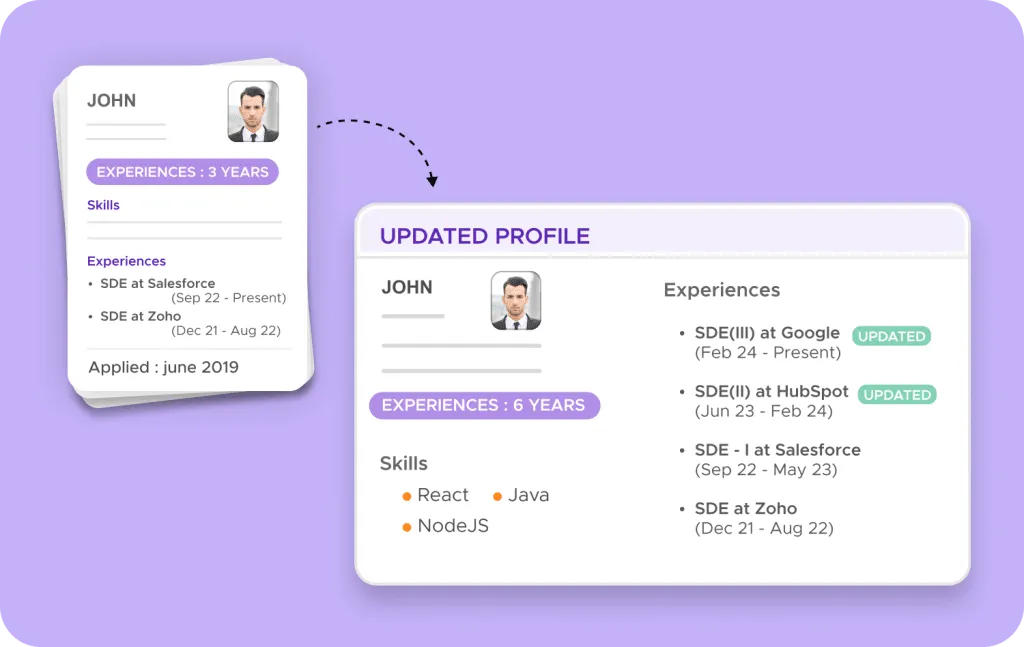
AI resume screening uses machine learning, natural language processing (NLP), and predictive analytics to analyze resumes and compare them to job requirements. Rather than just checking for keywords, it understands context — like matching related skills or relevant experience even when wording differs. This helps you identify high-potential candidates faster and more consistently than manual review.
AI tools can parse resumes into structured data (like job title, skills, and education), score candidates based on fit, and even flag top matches — all in a fraction of the time it would take by hand.
🔎 Examples of AI Resume Screening Tools
There’s no shortage of solutions that bring these capabilities into your workflow. Some popular tools that recruiters use include:
- Workable’s AI resume ranking, which automatically scores and ranks candidates based on predefined criteria.
- Peoplebox.ai, which integrates AI screening with your ATS to identify top matches faster.
- Platforms like Zoho Recruit and Jobvite, which combine parsing, matching, and screening in end-to-end recruitment suites.
- Specialized match systems like Beam AI, which use contextual resume analysis to deliver relevant shortlists.
5. Reference Check
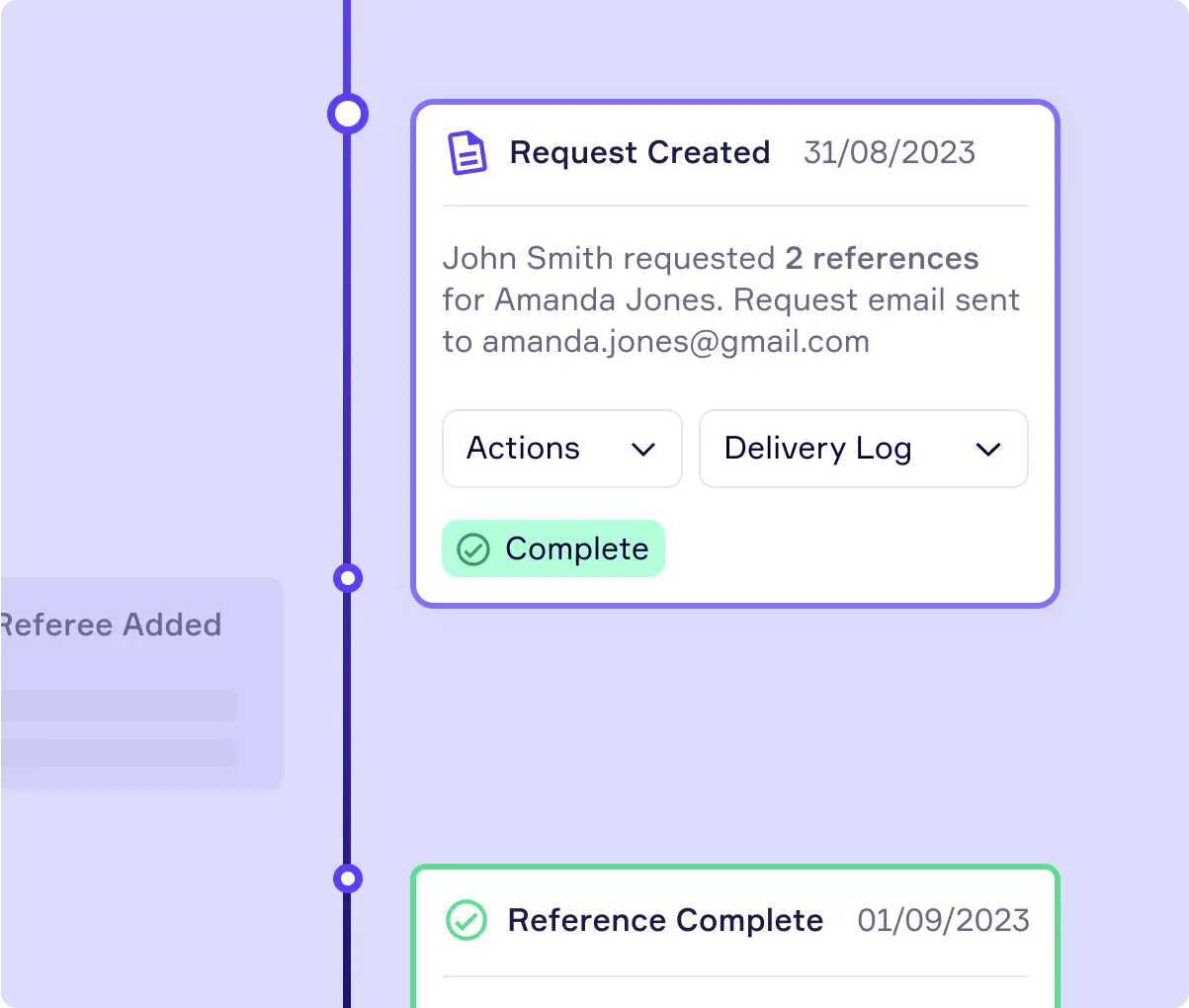
AI reference check tools automate the outreach to references, collect structured feedback, and often analyze the responses to give you clearer insights.
Instead of manually calling referees or waiting for slow email replies, these systems can send guided questionnaires, follow up automatically, and compile results into summaries you can review in minutes. They also help standardize the questions asked of every reference so your hiring decisions are based on comparable data — not random conversations.
🔧 Examples of AI Reference Check Tools
Here are some reference-checking tools that help recruiters automate and strengthen this stage of the process:
✔ RefNow
RefNow automates your reference checks end-to-end — from sending requests to consolidating reports. It helps you cut reference checking time by up to 95% and improves efficiency with GDPR-compliant workflows and fraud detection capabilities.
✔ Refapp
Refapp delivers digital, data-driven reference checks with customizable questionnaires tailored to your roles. You can benchmark candidates against research-based standards, get structured insights, and integrate the results directly with your ATS.
✔ X0PA AI
X0PA AI automates the entire reference outreach and collection process, sends personalized follow-up reminders, and compiles responses into a centralized dashboard for easy comparison. It also includes fraud detection and ATS integration so teams can evaluate references with confidence.
✔ Checkster by Harver
Checkster (Harver’s reference checking solution) streamlines reference collection with a short, structured digital survey that references complete online. The platform flags potential issues — like questionable referees — and can even generate passive candidate leads from reference responses.
✔ HiPeople
HiPeople brings AI-powered reference checks into a broader hiring platform, letting you collect and analyze feedback as part of a unified workflow alongside screening and assessment. It’s useful if you want reference insights in context with other hiring signals.
✔ Talenteria’s AI Reference Check
Talenteria’s solution automates outreach in multiple languages, manages communication with references, and uses AI to analyze feedback into structured insights — helping you make confident hiring decisions faster.
6. Pre-Qualification
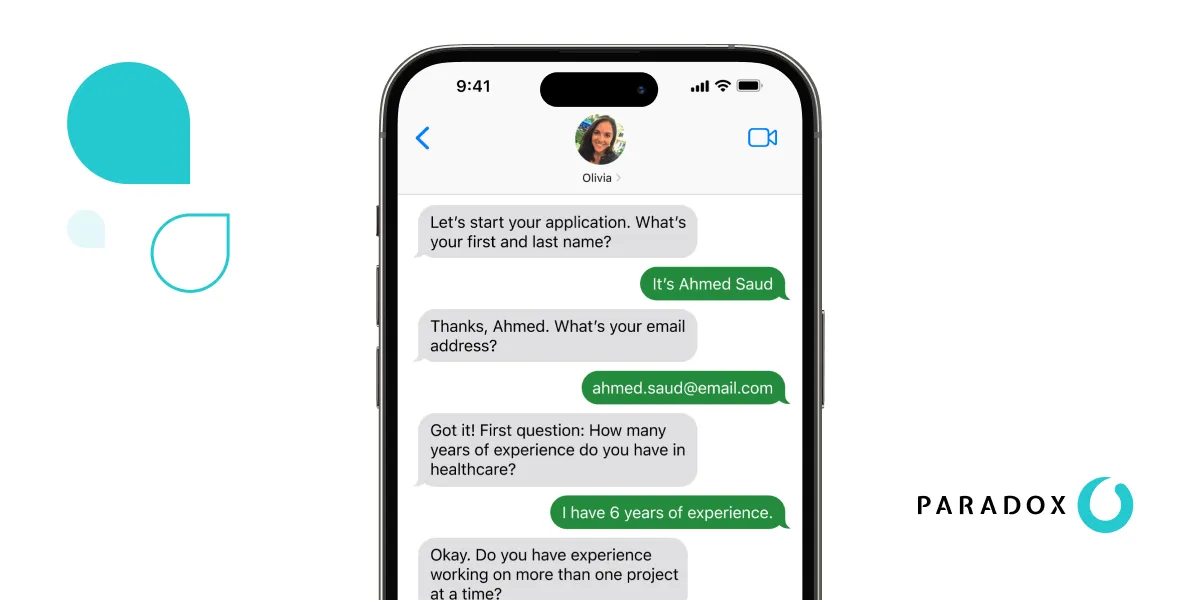
AI pre-qualification tools use conversational interfaces, chatbots, and programmable screening logic to interact with candidates automatically. These systems ask applicants a mix of role-specific questions, such as minimum experience, certifications, or availability, and evaluate the responses to decide whether someone moves forward in your pipeline. Instead of returning a long list of unfiltered applications, you get a pre-qualified shortlist of candidates worth deeper conversation.
🤖 Examples of AI Pre-Qualification Tools
🤖 Paradox (Olivia)
Paradox’s AI assistant “Olivia” is a conversational AI that engages candidates via text or chat to collect screening responses automatically. It can ask role-specific questions, confirm interest and eligibility, and even hand off qualified candidates to you for deeper evaluation. Many large employers use Olivia to save time and handle volume without sacrificing candidate experience.
🤖 PreScreen AI
PreScreen AI uses conversational AI to conduct automated pre-qualification interviews and gather detailed insights on candidate fit. The system simulates an engaging dialogue, collects structured responses to screening questions, and provides evaluative metrics for recruiters to act on. It even supports multiple languages, which is useful for international hiring.
🤖 XOR
XOR focuses on high-volume hiring and uses AI chat and text messaging to screen and qualify candidates automatically. It’s designed to handle recruiting at scale — for example in hourly roles or large campus drives — and can identify qualified applicants 24/7 without recruiter intervention.
🤖 AI Chatbots (e.g., custom ATS implementations)
Many applicant tracking systems (ATS) now integrate embedded chatbots that automate pre-qualification right from your careers page or job board listing. These bots can collect key candidate data, answer simple FAQs, and forward promising profiles to your recruiting team — all without involving a person at first touch.
7. Interview Scheduling
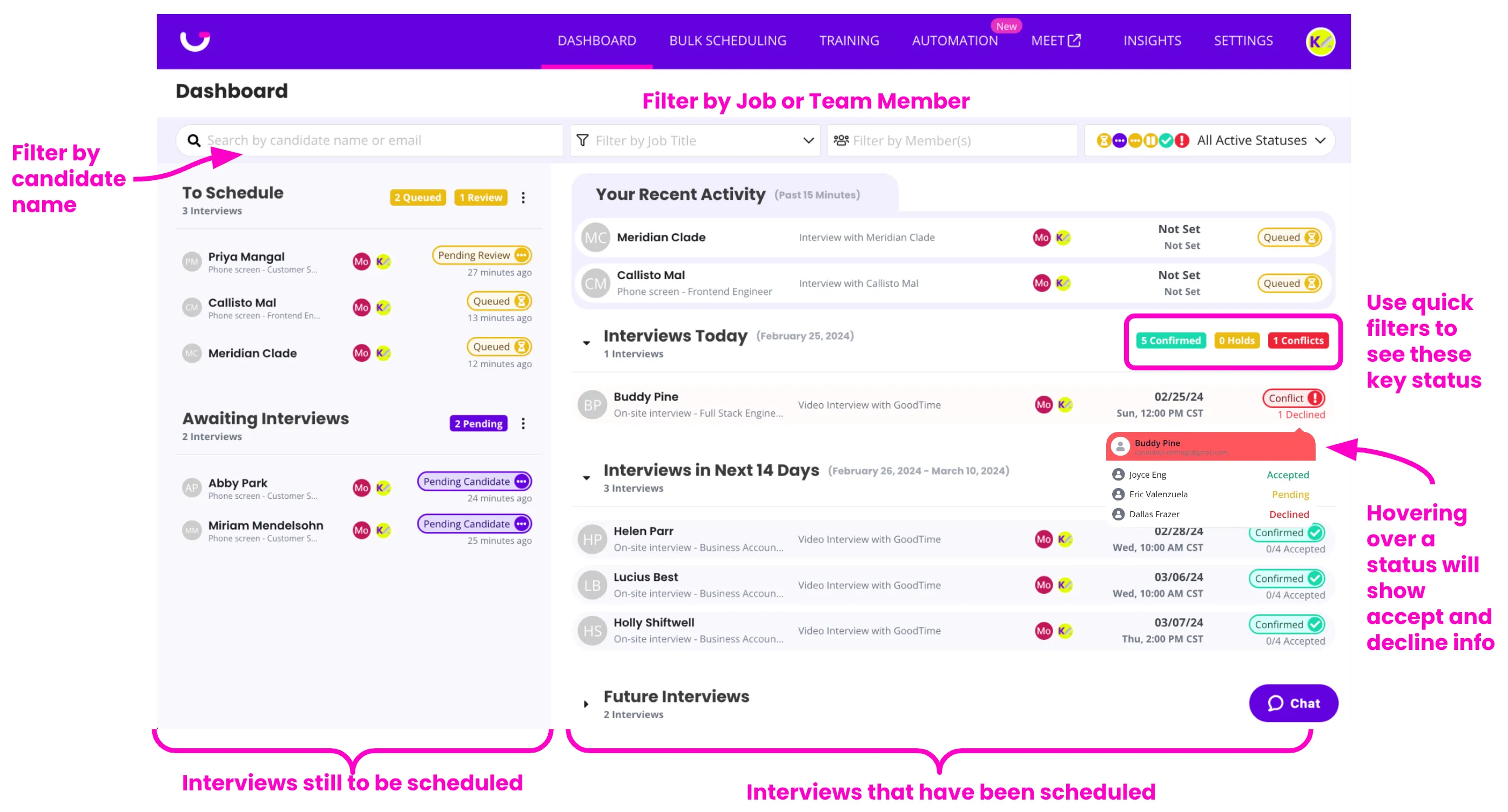
AI interview scheduling tools connect with your calendar, ATS, and communication platforms to coordinate interviews without endless back-and-forth emails. They automatically propose time slots, handle candidate self-booking, sync availability across recruiters and hiring managers, and even send reminders — reducing no-shows and confusion. Many of these solutions also factor in time zones, interviewer workload, and complex interview loops like panel interviews, making scheduling smarter and faster.
This isn’t just automation — it’s context-aware coordination. Rather than manually checking multiple calendars, AI tools parse availability in real time and surface optimal options, taking much of the grunt work off your plate.
🔧 Examples of AI Interview Scheduling Tools
Here’s a snapshot of widely used AI-driven scheduling tools that help recruiters coordinate interview logistics with less effort:
📅 GoodTime
GoodTime is built for enterprise-scale interview workflows. Its AI orchestrates candidate, interviewer, and hiring manager calendars, suggests ideal slots, and handles panel coordination automatically. It’s particularly strong for teams with complex interview loops and heavy hiring volumes.
🤖 Paradox (Olivia)
Paradox’s Olivia is a conversational AI assistant that can schedule interviews through chat interactions. Candidates can book or reschedule via text or website chat, and Olivia syncs with calendars behind the scenes — making the scheduling experience feel smooth and human-centered.
🗓️ NTRVSTA
NTRVSTA offers AI-first scheduling that integrates with major ATS platforms like Lever, Greenhouse, and Workday. Recruiters benefit from automated booking suggestions and reduced administrative load, while candidates get a frictionless booking experience.
✨ Calendly
While not recruitment-specific, Calendly is a simple and widely used scheduling tool that lets candidates self-book time slots based on your predefined availability. Its AI-powered reminders and calendar integrations make it ideal for smaller teams or early-stage scheduling needs.
8. Interview Note Taking
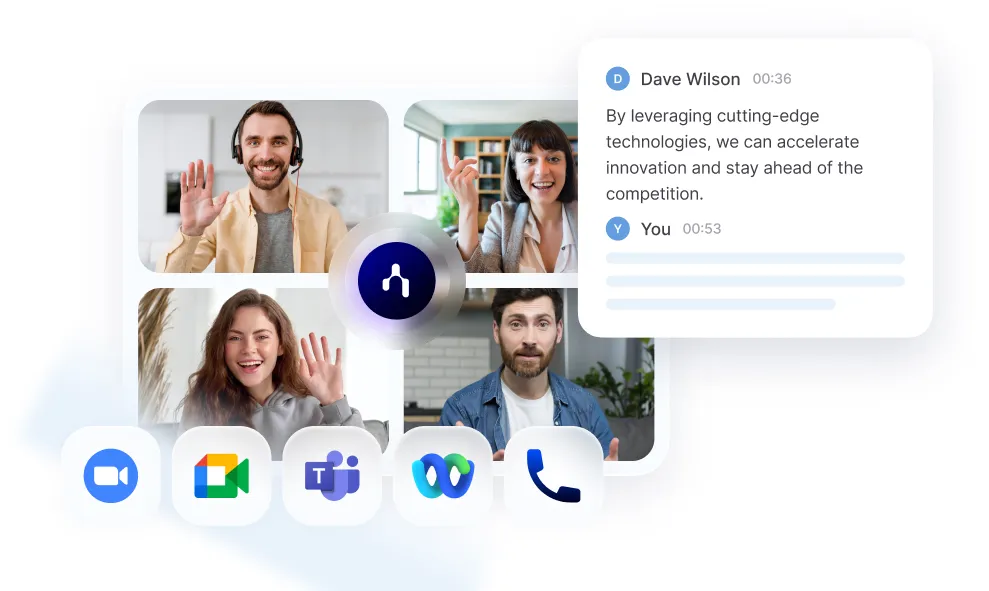
AI interview note taking tools join your interviews (or work with your recordings) and capture what’s said, organize it, and generate usable summaries and insights. You no longer have to split your attention between the candidate and your note app — AI takes care of the documentation, leaving you free to probe deeper, build rapport, and evaluate responses in real time.
These tools don’t just transcribe — they often structure notes by topic, competency, or scorecard criteria, meaning your next step (writing the interview report, debriefing with the hiring team) becomes faster and more evidence-based. They also help reduce bias that can come from fragmented or inconsistent notes.
🔧 Examples of AI Interview Note Taking Tools
Here are some powerful tools you can start using to automate and improve your interview notes:
🧠 Noota’s AI Notetaker
Noota records your interviews, transcribes them, and generates a structured report. This enables recruiters to easily evaluate and compare candidates based on concrete interview data. What's more, Noota helps easily share the candidate data between members of the recruitment team, ensuring that everyone is up to date. This approach ensures better organization of the data collected, and more informed decision-making.
TRY NOOTA FOR FREE HERE
9. Candidate Assessment
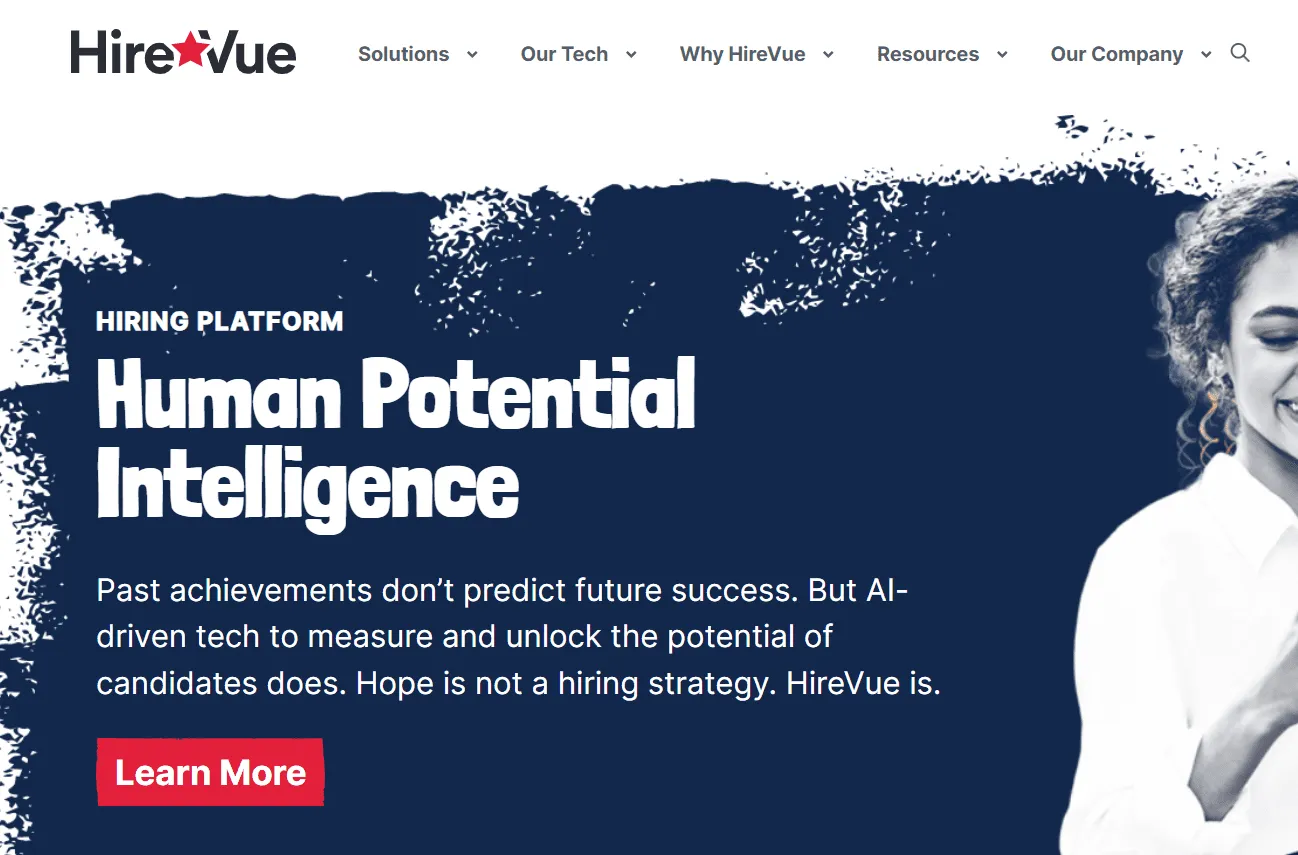
AI assessment tools combine data, machine learning, and behaviour analysis to evaluate candidates on specific job-relevant skills. This can include cognitive ability, technical skills, personality traits, problem-solving capabilities, and even communications style. Rather than relying solely on a resume or unstructured interviews, AI gives you structured insights that help predict job performance more accurately.
These tools typically work by presenting candidates with tests, simulations, or interactive tasks, then using AI algorithms to score and interpret results in context — giving you objective metrics you can act on.
🧠 Examples of AI Candidate Assessment Tools
Here are several tools recruiters are using today to take their assessments to the next level:
🎯 HireVue
HireVue is one of the most widely used AI assessment platforms. It supports video interviews, behavioral assessments, and AI analysis of candidate responses. Its algorithms can help expand understanding beyond resumes to skills demonstrated on camera, and many organizations use it to evaluate communication, critical thinking, and job-fit attributes.
🧪 TestGorilla
TestGorilla offers a broad library of skill tests, including cognitive, technical, and language evaluations. Its AI-driven scoring and benchmarking help you compare candidates consistently for specific job requirements, making it a popular choice for talent teams that want comprehensive, structured assessments.
⚙️ Assess Candidates
Assess Candidates is designed to provide predictive, data-driven insights based on scientifically validated assessments. It measures competencies that align with on-the-job success, giving you confidence in your hiring decisions and helping you avoid mismatches.
💡 Vervoe
Vervoe uses AI to simulate real work scenarios and evaluate candidates on how they would actually perform tasks similar to the job. It goes beyond multiple-choice tests by assessing real responses in work-like conditions.
10. People Mapping & Analytics
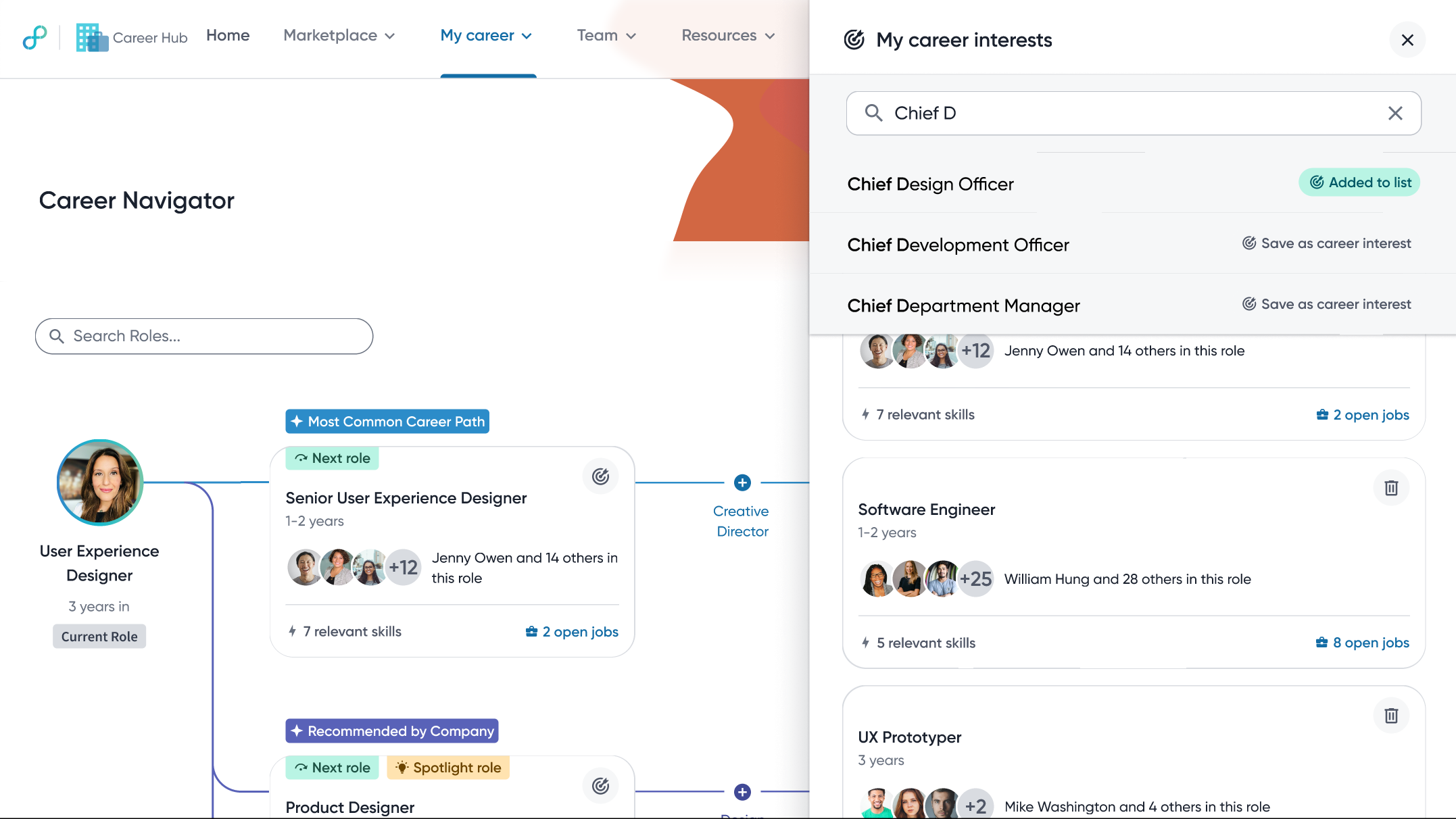
People mapping (also called market or talent mapping) uses AI and historical data to visualize where talent exists — in terms of skills, roles, industries, and geographies — even before candidates apply. It’s proactive rather than reactive: instead of only working with the candidates who apply, you can anticipate where your future hires are, what they’re doing, and how hard they’ll be to attract.
Analytics extends this by giving you actionable insights from talent data — for example, which regions have surpluses of a skill you need, which channels yield the best hires, or which pipelines are stalling. You can measure and optimize recruiting performance, not just manage tasks.
🔎 Examples of AI People Mapping & Analytics Tools
🔥 Eightfold AI
Eightfold’s platform combines talent intelligence with AI to help teams understand internal and external talent pools, analyze skills, and forecast workforce needs. It gives you a holistic view of where candidates with specific competencies are, how they progress in their careers, and how to align your sourcing strategy accordingly.
This is especially powerful in competitive markets where you want to anticipate hiring needs instead of reacting. You can identify candidates who may not be searching actively but whose profiles align with your long-term talent strategy.
📊 Recruitment Analytics Platforms (e.g., Visier, Phenom, Workable)
Tools like Visier, Phenom, and Workable provide recruitment analytics dashboards that help you track hiring performance metrics end-to-end — from funnel drop-off points to source quality and recruiter efficiency. These systems turn your recruiting data into visuals and KPIs you can present to hiring managers and leadership.
For example, Visier offers comprehensive insights into talent acquisition metrics across the lifecycle, while Phenom focuses on candidate experience, pipeline health, and workforce trends. Workable integrates predictive analytics that help you see which candidates are most likely to succeed — and which recruitment channels are performing best.
📌 Market & Talent Mapping Interfaces (e.g., Findem)
Platforms like Findem’s Market Intelligence give you real-time insight into talent supply and demand, including hiring patterns, skill availability, and competitive benchmarks. This goes beyond individual candidates to reveal where talent is concentrated and how your competitors are hiring, which can guide your sourcing and compensation strategies
FAQ
❓ What exactly is AI recruitment?
AI recruitment refers to using artificial intelligence to automate, augment, and improve hiring tasks such as finding candidates, screening resumes, ranking applicants, conducting assessments, and managing communication. These tools apply machine learning and natural language processing to help you make better, faster decisions with less manual effort.
In practice, that might look like an AI scanning thousands of resumes and ranking them by fit, or a chatbot engaging candidates with screening questions before you ever step in.
❓ Does AI recruiting replace recruiters?
No — AI doesn’t replace recruiters. It augments your work. AI handles repetitive or high-volume tasks like sourcing, screening, scheduling, and note taking, giving you more time for relationship building, strategic decision-making, and the human interactions that matter most in hiring.
Put simply: AI frees you from busywork so you can focus on people, not paperwork.
❓ How does AI improve recruiter productivity?
AI boosts productivity in several concrete ways:
- Speed: AI can screen resumes and shortlist qualified candidates in minutes rather than hours.
- Consistency: Standardized screening helps you compare candidates fairly across roles.
- Scalability: AI handles repetitive work automatically — candidate outreach, initial screening, scheduling, follow-ups — at scale.
- Data insights: AI tools often include analytics dashboards that show where bottlenecks occur and how to improve your hiring funnel.
❓ Does AI reduce bias in recruiting?
AI can help reduce some types of hiring bias by applying standardized criteria and treating all candidates based on skills and experience. However, it’s not a magic bullet — AI models can inherit bias from their training data or algorithms if not designed carefully.
Best practice: monitor your AI alerts and outputs regularly to ensure fairness and adjust scoring or criteria where needed.
❓ Are candidates aware when AI is used?
Yes — good candidate experience practices encourage transparency. Many tools let candidates know when an automated system is helping with screening or scheduling, which builds trust. Just be sure to mention it upfront during application or interview scheduling.
This clarity improves candidate perception and avoids surprise or confusion along the recruitment path.
❓ What kinds of AI tools should I consider?
AI recruiting tools vary by function. Some examples include:
- Sourcing & outreach: Platforms like hireEZ or PeopleGPT help you find, rank, and engage candidates efficiently.
- Screening & ranking: Tools such as Ideal or AI-driven ATS systems automate résumé parsing and scoring.
- Conversational assistants: Chatbots like Paradox’s Olivia automate candidate engagement and initial screening questions.
- Assessments & analytics: Many platforms embed AI scoring and analytics so you can predict candidate fit and track hiring metrics.
❓ Is AI recruiting ethical?
AI recruiting can be ethical when implemented thoughtfully. Responsible use means:
✔ Using AI to enhance fairness, not mask bias.
✔ Making sure human judgment remains central to decisions.
✔ Being transparent with candidates about where automation is used.
Leverage your Interview Data
AI interview notes, scorecard, follow-up, ATS integration, and more...

Jean-marc is an AI expert helping recruiters & professionnals leverage these tools in their everyday work.
Related articles
.webp)

.png)

Forget note-taking and
try Noota now
FAQ
In the first case, you can directly activate recording as soon as you join a videoconference.
In the second case, you can add a bot to your videoconference, which will record everything.
Noota also enables you to translate your files into over 30 languages.
.svg)